
Car Shaking at Idle — What to Check First
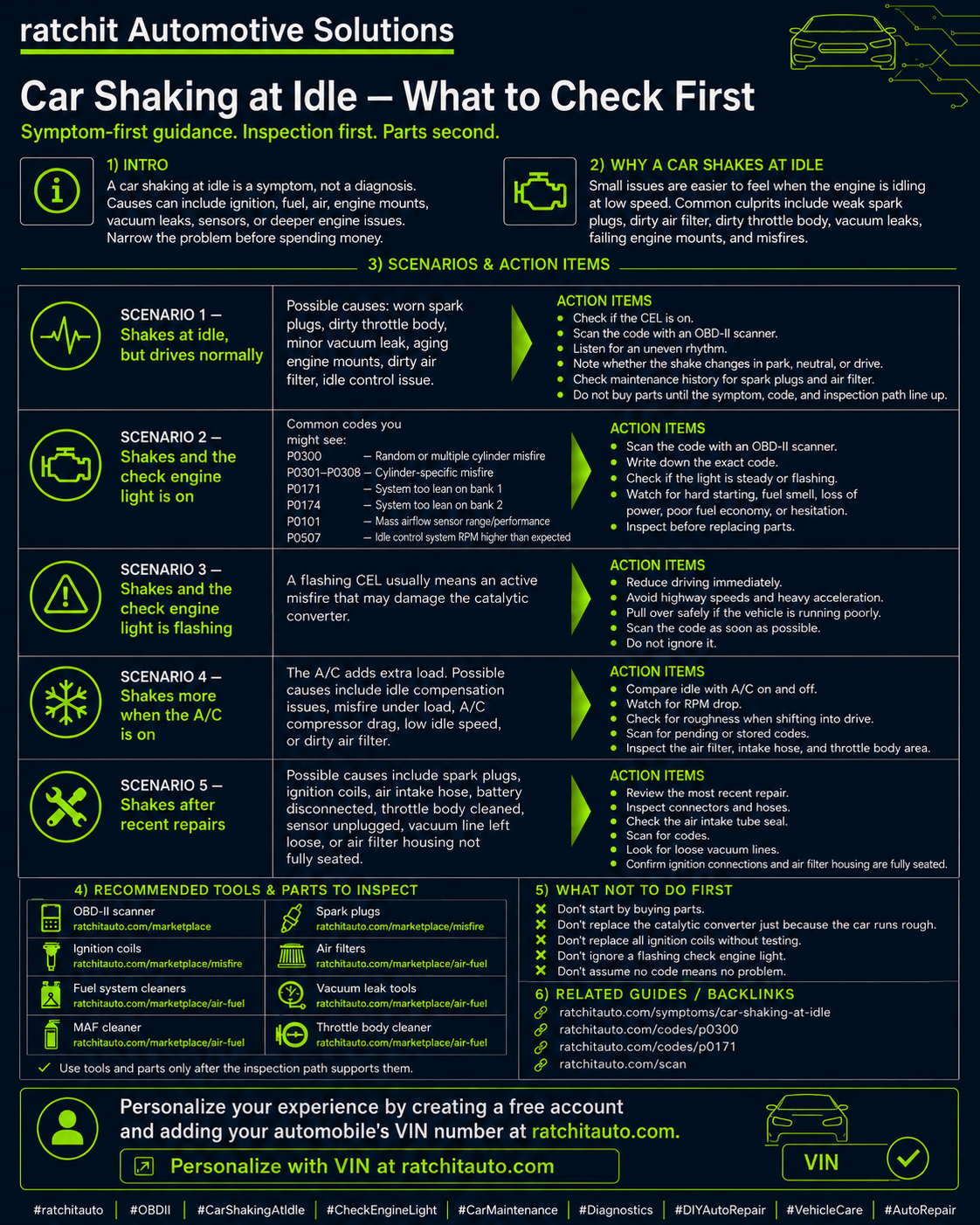
Symptom-first guidance. Inspection first. Parts second. Narrow the problem before spending money.
June 8, 2026
On-site FAQ: Car Shaking at Idle
5 common questions drivers ask first
Why is my car shaking at idle?
A car usually shakes at idle because the engine is not running smoothly at low speed, or because vibration is being transferred into the cabin. Common causes include worn spark plugs, ignition coil issues, vacuum leaks, dirty air filters, dirty throttle body, fuel delivery problems, or worn engine mounts.
Is car shaking at idle serious?
It can be. A slight shake with no warning lights may be a maintenance issue, but a strong shake with a check engine light should be checked soon. If the check engine light is flashing, reduce driving immediately because an active misfire may damage the catalytic converter.
What is the most common cause of rough idle?
One of the most common causes is an ignition issue, especially worn spark plugs or failing ignition coils. Air and fuel problems can also cause rough idle, including vacuum leaks, dirty air filters, dirty throttle body, or a mass airflow sensor issue.
Should I drive if my car is shaking at idle?
If the shaking is mild, the check engine light is off, and the vehicle drives normally, you may be able to drive carefully while you investigate the cause. If the check engine light is steady, scan the code and inspect the likely system. If the light is flashing, avoid driving normally and get the problem checked as soon as possible.
How do I diagnose car shaking at idle?
Start by checking whether the check engine light is on. Then scan for OBD-II codes, note whether the shake changes in park, neutral, or drive, and review maintenance history for spark plugs, ignition coils, air filters, and recent repairs. Use the symptom and code together before replacing parts.
Personalize with VIN
Get guidance built around your vehicle, your mileage, and your situation.
Personalize with VIN